

AUSTRALIA EDUCATION SYSTEM
From school to university or vocational training, Australia offers flexible study pathways for every stage of learning.

EDUCATION PATHWAY

Build essential knowledge, skills and confidence


Develop knowledge, interests and future study skills

Academic study leading to a recognised qualification


Practical, career-focused training for industry

Explore career and migration pathways available to eligible graduates.



Primary school is where children begin their formal education in Australia. The curriculum covers literacy, numeracy, science, arts, and physical education in a nurturing, structured environment.
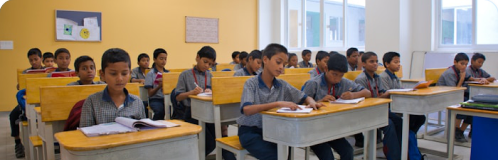
Secondary school prepares students for university, TAFE, or the workforce. Students choose electives in Years 11–12, leading to the Senior Secondary Certificate (such as VCE or HSC).

Australia is home to internationally recognised universities offering world-class education and research opportunities.

Technical and Further Education (TAFE) institutes offer vocational qualifications that lead directly to in-demand careers. TAFE is ideal for hands-on learners and those seeking shorter pathways to employment or migration.
NOT SURE WHERE TO START?
PARENT FAQ
English proficiency requirements vary by school and state. Most government schools provide English as an Additional Language or Dialect (EAL/D) support for students who are still developing their English. Private and international schools may have their own language assessment processes.
Government (public) schools are funded by the state and are free for Australian residents. Private (independent or Catholic) schools charge tuition fees but often offer additional facilities, smaller class sizes, and different values-based approaches. International students typically pay fees at both government and private schools.
Children generally start school at age 5 in Preparatory (Prep/Kinder) or Foundation Year, depending on the state. School attendance is compulsory from age 6 to 17. The exact starting age can differ slightly between states and territories.
Children on a tourist visa (Subclass 600) can attend school for up to 3 months without a separate student visa. For longer enrolment, a Student visa (Subclass 500) or a Student Guardian visa (Subclass 590) for the accompanying parent may be required.
The ATAR (Australian Tertiary Admission Rank) is a number between 0 and 99.95 that ranks Year 12 students for university entry. Each university sets minimum ATAR requirements per course. International students typically apply through a separate pathway assessed alongside their overseas results and English test scores.
TAFE is an excellent choice for students who prefer hands-on, practical training and a shorter pathway to employment. Many TAFE qualifications are directly linked to occupations on Australia's skilled migration lists, making TAFE particularly valuable for students who plan to work and potentially stay in Australia after study.
We've helped 17,000+ people secure their dream in Australia.

B.Smart guided me through the entire 190 process from skills assessment to grant. Their personalised strategy made all the difference — I had a case officer assigned within weeks.
I had no idea which visa was right for me. After one session with my B.Smart agent, everything clicked. I submitted my 189 EOI and received an invitation within 2 months.
The team was professional, responsive and genuinely invested in my outcome. They helped me maximise my points score and choose the right state nomination.
I'd tried navigating the system myself for months. B.Smart simplified the whole pathway in our first consultation. Absolutely worth every dollar.
